
 Archives / 2016People · Policy · The public record
Feliza Castro · Springfield, Illinois · May 2, 2016
Three minutes
for our patients.
A young founder, a stack of patients’ stories, and a state hearing with a time limit. What it meant to bring The Healing Clinic’s advocacy to Springfield.
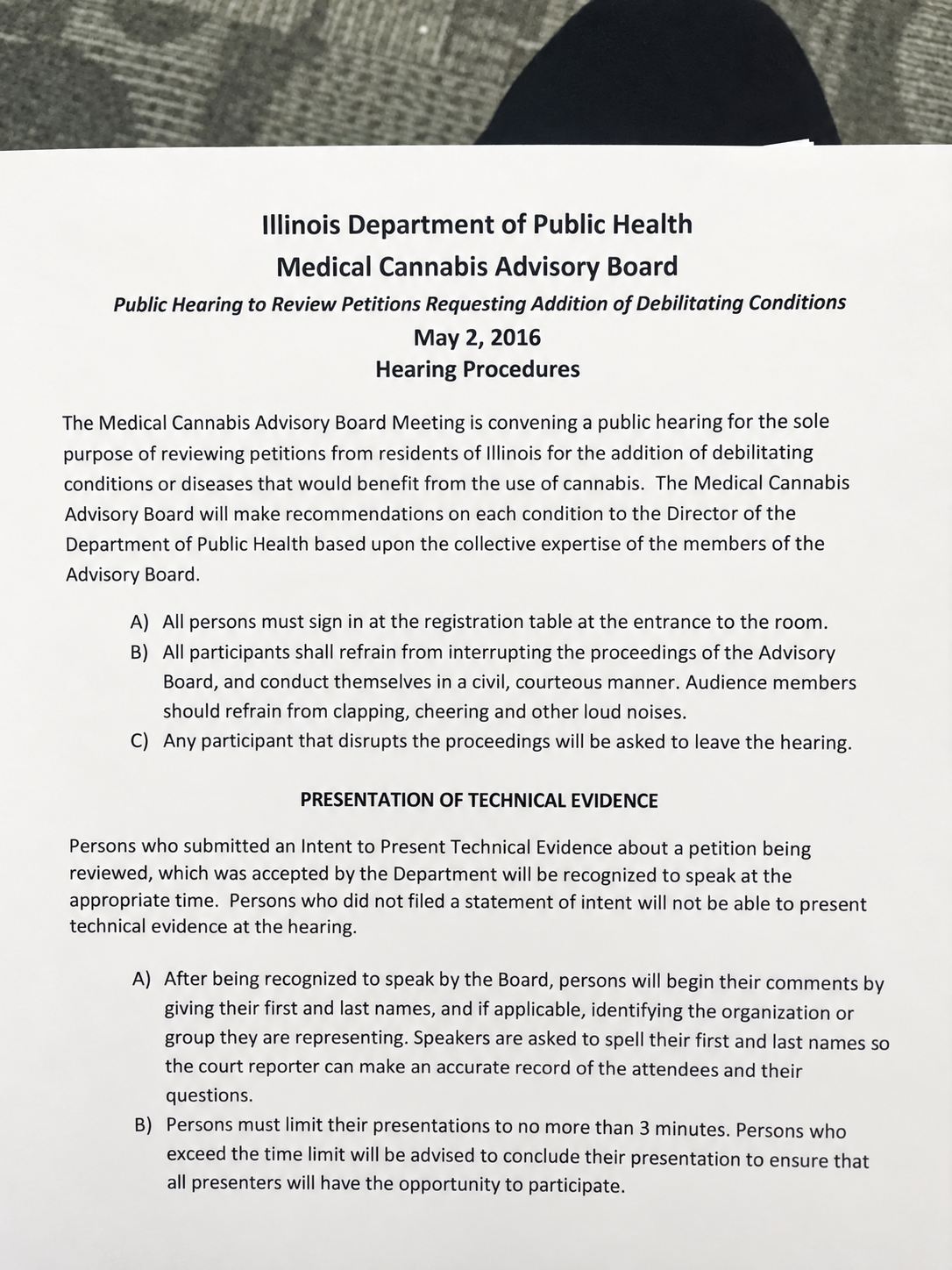
Three minutes. Long enough to steep a respectable cup of tea. A rather brisk allowance for explaining why a patient deserves a chance at a less painful life.
That was the speaking limit at the hearing. The lives I had come to talk about were inconveniently larger. By the time I arrived in Springfield, I had spent extraordinary hours listening to patients, helping them navigate an unfamiliar process, and preparing to bring their experiences before the people who could recommend changing it.
I was in my twenties, raising a daughter as a single mother and building The Healing Clinic. My calendar suggested I had mistaken myself for a small staff. There were patients to help, a business to run, and a child whose life did not pause for any of it.
At the clinic, I was learning how much could disappear inside a tidy administrative phrase. Not a qualifying condition. It sounded almost bloodless. Set beside a patient describing what it took to get through an ordinary day, it became something else entirely.
On May 2, 2016, I brought some of those lives into the record.
Competence and anxiety
are not mutually exclusive.
The person behind the preparation
A capable woman.
An unquiet mind.
I knew anxiety long before I knew advocacy. I grew up in a chaotic household, and the fear I learned there did not disappear simply because I became an adult with responsibilities. From the outside, I could look composed: a business, a child, a plan. Inside, the alarm could still be ringing.
Competence is excellent camouflage. People see the appointments kept, the business opened, the child cared for. They do not necessarily see what it costs to make all of that look ordinary. A blazer can do marvelous things. It cannot switch off a nervous system.
For me, cannabis has made that underlying fear more tolerable. That is my experience, and I will not dress it up as a promise about anybody else’s body. But knowing what relief can feel like made me less willing to accept how easily other people’s suffering could be dismissed.
I believe people suffering with anxiety deserve a meaningful chance at relief. The gatekeepers and paywalls should not be more formidable than the condition itself. Asking for help is already an act of courage; it should not require a talent for bureaucracy.
So yes, I was nervous in Springfield. Anxiety had not inspected my résumé and politely excused itself. I went anyway.
Before the microphone
The work did not begin
at the podium.
The hearing occupied a day on the calendar. The preparation occupied whatever hours I could find. Running a clinic, helping patients through the application process, and listening to the people still shut out of it had taught me to pay attention to the details a form could not hold.
The patients who shared their words with The Healing Clinic were trusting us with something intimate: the parts of life that rarely make it into a public biography. Pain. Panic. Money. Parenting. The quiet calculations required to leave the house or get through work. I was taking that trust into a room with a microphone.
I had built the business without investors. The confidence to keep building it came with practice; the hours came out of my own life. Being a single mother made the strain on other families feel particularly close. I knew what it meant to be the person who had to keep things moving.
Feliza’s words · official record“I’m a little nervous.”
There it is, preserved by the court reporter: the nerves. A more flattering edit might have left that part out. I prefer it in. The young woman at the microphone had something important to say, and she said it with her anxiety very much in attendance.
Composure gets a great deal of credit. Continuing deserves some too.
From the day · approximately 58 seconds
Outside the hearing.
Still in the moment.
Before this became an archive, it was a day I wanted our patients to hear about. I recorded this update outside the hearing to bring the proceedings back to the people who had helped make the trip matter.
Watch it beside the written record: one preserves the proceedings; the other preserves a young advocate trying to get the news back to her community.
The votes discussed in this recording were advisory-board recommendations. A favorable vote did not itself make a condition legally eligible that day.
Open the original video ↗
Six appearances · one responsibility
Make room for the people
behind the petitions.
My testimony from six appearances that day: my own remarks, the patient-authorized statements I read aloud, and my answers to the board.
Reading the archive: navy quotation blocks contain my own remarks and replies. Teal quotation blocks contain the patient-authorized statements I read aloud. Testimony delivered by other speakers is not reproduced here. Paragraphing is adapted for readability; recorded wording is retained. The surrounding essay is a present-day reflection. Medical assertions are preserved as historical testimony, rather than presented as current medical guidance.
Diabetes: an ordinary life, interrupted.
I read a mother’s account of diabetes, pain, financial strain, and her daughter’s difficulties. The board then asked a question about diabetes type.
Feliza’s opening replies and microphone check · pages 34–35
Feliza Castro · testimonyYes. Hi. Thank you so much.
Feliza Castro · testimonyHi. My full name is Feliza —
Feliza Castro · testimonyOkay.
Feliza Castro · testimonyHi. My name is Feliza Castro, and I am the owner of The Healing Clinic, and I —
Feliza Castro · testimonyMy name is spelled F, like family, e-l-i-z-a. My last name is Castro, C-a-s-t-r-o. I own an advocacy center for medical cannabis patients. Speak louder?
Feliza Castro · testimonyOkay. Is that better?
Feliza Castro · introducing the patient’s statementThat’s okay. We hear from patients at our advocacy centers. We have one in Chicago and we have one in Highland Park, and we hear from patients all of the time that could benefit from medical cannabis but can’t because their conditions are excluded from the Program.
I feel as though diabetes is one of them. I am here to actually speak on behalf of the patient who’s turned in testimony. If it’s all right with members of the Board, I would like to read the testimony on behalf of this patient. It says:
Patient’s statement · read by Feliza CastroMy daughter and I have been suffering together for far too long.
Feliza Castro · at the microphoneI’m a little nervous.
Feliza Castro · introducing the patient’s statementI got it.
Patient’s statement · read by Feliza CastroMy daughter and I have been suffering together for far too long. I have crippling neuropathy caused by my diabetes, which until recently was entirely uncontrolled. On a normal day I could not keep my blood sugar above 50 and had absolutely no appetite.
It’s a vicious and dangerous cycle to fall into. At one point I lost five pounds in two days. My daily life is a constant struggle. Just last Friday I got sugar up to 225 for the first time in weeks, and then immediately it started to downfall.
Every part of my body started to hurt and my muscles felt like they were deteriorating. When this happens my extremities go numb and I can’t hold things or walk. It feels as though my palms are on fire, and every moment, every movement causes shooting pains.
Amber, my 18-year old daughter, is far too young to have to put up with the amount of pain she has every day. Also a diabetic, I see this illness getting worse for her, just like it did for me at her age. Not only is she beginning to suffer with diabetes neuropathy, but she has crippling PTSD, which prevents her from leading a normal, teen-aged life.
And her flashbacks are getting more and more frequent during they day, and her night terrors have prevented her from getting regular sleep on day’s end. Amber, too, cannot work or go to school.
With both of us being so mentally and physically unwell, we are always financially strapped and at risk of losing the roof over our heads. We cannot afford to suffer like this any longer.
A friend suggested that we both try using medical cannabis to ease our pains, and I started to regain hope. The difference was night and day for both me and Amber. Our appetites finally returned, and we were cooking together for the first time.
The numbness and tingling in my hands and feet disappeared, and I finally get around the house on my own. I could actually walk. I felt truly happy for the first time in years. Amber was also incredibly relaxed and didn’t have any flashbacks for days, which brought tears to a mother who hasn’t seen her baby (inaudible) for far too long.
It would mean the world to us to be able to have safe and regulated cannabis at our disposal. I cannot stress enough how much my outlook improved when I use marijuana medically. I do not want to put me and my daughter at legal risk to get this relief any longer. Please expand access so that people like us who try cannabis ease our suffering. Is that really so criminal?
The board asked whether the patient and her daughter had Type I or Type II diabetes. My answer:
Feliza Castro · testimonyShe did not specify. In her testimony she did not specify. And this is all she has authorized me to share.
Feliza Castro · testimonyYou’re very welcome.
Feliza Castro · testimonyThank you for having me.
When asked to switch off the microphone:
Feliza Castro · testimonyView the official record · pages 34–39 ↗Sure.
Panic disorder: beyond the front door.
An anonymous patient described agoraphobia and a changed ability to participate in daily life. I also spoke about my own experience with anxiety.
Feliza Castro · introduction and personal experienceHi. Thanks again. I’m going to read testimony on behalf of a patient who wanted to speak anonymously. Hi. I, myself, also suffered from anxiety disorder, and I can say that medical cannabis helps me a lot personally. But I’ll read this testimony.
Anonymous patient’s statement · read by Feliza CastroI’m a 28 year old woman from Chicago, and before medical cannabis you wouldn’t have seen or heard from me because I’m agoraphobic.
When asked to slow down:
Feliza Castro · responding to the boardSure.
Anonymous patient’s statement · continuedBefore medical cannabis you wouldn’t have seen or heard from me because I am agoraphobic. The widespread panic that washes over me is enough to make me cringe at the thought of going out and seeing people. It’s easier in many instances to disregard the thought all together and to sit at home.
It’s embarrassing. I’m a grown woman and it’s hard for me to leave the house. When I was approved for my medical cannabis card for rheumatoid arthritis and fibromyalgia, my life changed in every possible way.
Not only could I almost eliminate the chronic pain I experienced on a daily basis, but for the first time ever I didn’t need to take a Valium or tranquilizers just to be at social gatherings. I was able to leave the house. Cannabis alone has brought a whole new lease on my existence. I haven’t had a panic attack in almost six months. I haven’t hyperventilated or cried at a single public function since I started this regimen.
I haven’t had to miss out on one of the most precious parts of life because of crippling anxiety. Medicinal marijuana has improved my ability to be a good friend, partner, caregiver, and overall has made me a healthier person.
In all honesty, I hate that I require anything to do what a normal person sans anxiety and panic does on a daily basis, but this is the first alternative I’ve ever tried that has given me hope.
Every day is a little bit better because of this medicine. Thank you.
Feliza Castro · closing commentsI’d also like to point out that cannabis is much less addictive than Benzodiazepines, which are often prescribed for panic disorders and anxiety.
There are also studies on this by a Dr. Irit Akirav, who is published in 39 different studies. She’s an expert in biological psychology, and she published one study entitled Cannabinoids Prevent the Development of Behavioral and Endocrine Alterations in a Rat Model of Intense Stress. That’s it. Thank you.
I understood why that deserved to be heard.
View the official record · pages 57–60 ↗One year earlier
From the wider conversation · WBEZ
The debate had a history.
So did the waiting.
A year earlier, WBEZ had reported on a hearing in which the board recommended PTSD and migraines but rejected diabetes and anxiety. The May 4, 2015 coverage captures a debate already well underway before my May 2016 appearance.
For patients, the interval between hearings was filled with the same symptoms, the same expenses, the same unanswered questions. Policy has a calendar. So does pain. They are rarely considerate of each other.
Visit the WBEZ coverage · May 4, 2015 ↗Autism: a family facing a choice.
I read an anonymous father’s account of his son and the possibility of leaving Illinois.
Feliza Castro · introducing a father’s statementThank you. And, again, I would like to thank you, the Board, for allowing me to submit testimony on behalf of other patients. So this is an anonymous testimony from a patient, oh, from the, I’m sorry, from the father of a patient.
He says
Anonymous father’s statement · read by Feliza CastroI have never really considered marijuana until my son was diagnosed with autism. It all started when he was around two, and he would throw violent fits in reaction to small changes to his routine.
Things only got worse as he started pre-school and was formally diagnosed. It was exhausting for me to manage his rage while trying to give him a happy childhood.
After trying a couple of mood stabilizers, I decided I no longer wanted him to be a guinea pig while they figured out the right cocktail of pharmaceuticals to sedate him. He wasn’t responding well, if at all, and I couldn’t watch my four-year old baby boy taking all of these toxic substances while he was still developing. Another mother and online support group suggested that I look into cannabis oil.
More and more families were coming out into the light to share how marijuana improved their home and gave their kid with autism a more normal childhood. I decided to take a huge risk and flew him to Colorado.
We stayed for two weeks and I began giving him very small doses of what was recommended by other mothers. I noticed immediately how calm and kind he was being. We went on walks and enjoyed nature together without a single fit.
My job, family and friends are all in Illinois. I don’t want to move, but if I have to do what is best for my son, I will. This is our last effort to stay here before we have to start a new life in a more compassionate state.
Feliza Castro · closing commentsView the official record · pages 100–102 ↗And there are some pretty compelling studies out there around the benefits of cannabinoids for autism. MAMMA is a great organization. It’s Mother’s Advocating Medical Marijuana For Autism. They have a really great selection of resources and studies. Thank you for your time.
An effort made of people
Nobody builds a movement
entirely alone.
Ownership and advocacy have different arithmetic. I owned The Healing Clinic; the effort to change access belonged to many people. Patients, families, colleagues, and fellow advocates each brought something the others could not supply.
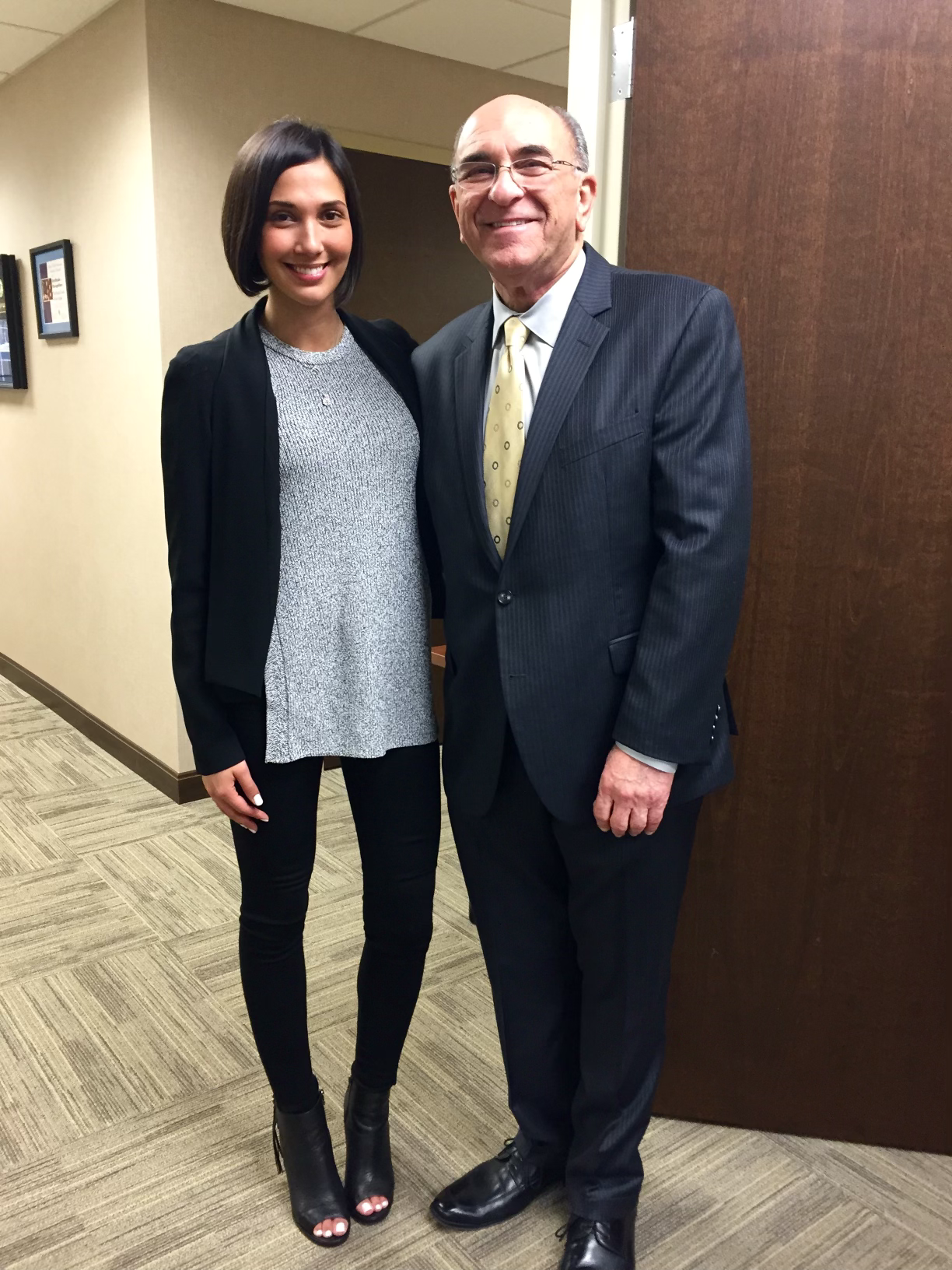
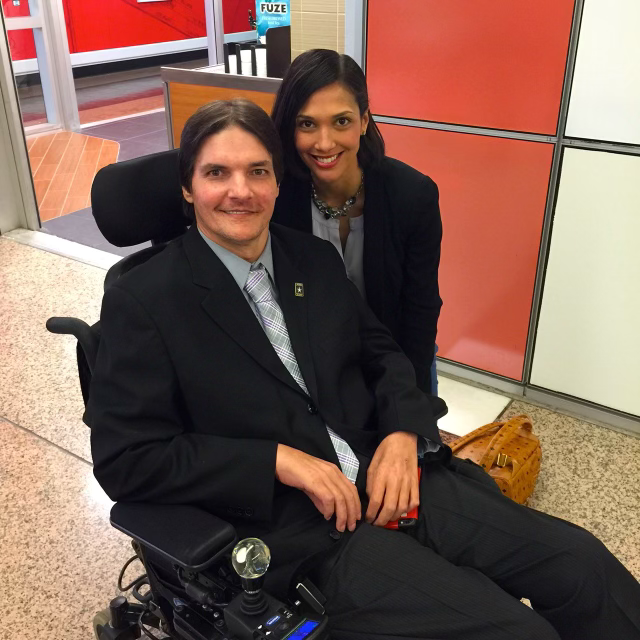
The photographs preserve some of the faces: Jim Champion, Representative Lou Lang, me. Other people are present in the words I carried—people who could not travel, preferred anonymity, or needed someone else to speak for them.
I am proud of the place I earned in that work. Remembering the people beside me makes that pride more precise.
IBS: the dignity of an ordinary day.
Two patients described how irritable bowel syndrome affected home life and work.
Feliza Castro · introductionHi. Thanks again for having me. I’m going to read two testimonies from two separate patients that turned these testimonies into The Healing Clinic. One was from Pamela Santos of Chicago, Illinois.
She says:
Pamela J. Santos · statement read by Feliza CastroMy name is Pamela J. Santos, and I have been suffering with irritable bowel syndrome for many years with severe cramping and constipation and diarrhea, which has made me pass out many times alone in the house, even causing me to fracture my arm.
I’ve done so much research on medical cannabis for pain management. I have been a nurse all of my life, now currently on SSD due to severe osteoarthritis, IBS, panic disorder, anxiety, depression, migraines and insomnia.
I know that cannabis would be a more natural, less harmful option for me than taking so many of the pills I am taking now. I have dry mouth and dry eye syndrome caused by all of the prescription drugs I have had to take for these conditions, while I could be using just one plant that would not cause such adverse reactions.
Please consider how cannabis can help make life easier for people like me, and all the rest of the poor people that are suffering in this state due to our restrictive cannabis program. We all desperately need your help.
Feliza Castro · introducing the second statementAnd then I have a second testimony from an Ian Oraveck from Chicago, Illinois as well. And he says:
Ian Oraveck · statement read by Feliza CastroFour years ago I started presenting symptoms of Irritable Bowel Syndrome, and was shortly after diagnosed with IBS.
IBS has drastically changed my life. It complicates simple, everyday errands, and prevents me from being able to perform timely tasks required at work. My doctor prescribed me Dicyclomine and multiple probiotics, which mildly helped my symptoms but did not prevent them all together.
If I was having a bad IBS day, none of the medicine prescribed would help calm my stomach. I did some research online and found that marijuana has been shown to help with IBS and can calm the stomach. I finally gave it a chance and never looked back. Almost instantly my stomach was settled and the pain and bloating started to subside. The most surprising thing was that I no longer felt the urge to have to consistently use the bathroom.
At my worst, I used to find myself on the toilet in pain between 10 to 15 times every single day. Cannabis is the most effective medicine I have used in relieving my IBS symptoms. Since I have been using the natural medicine I have never felt better.
I am no longer having to look out for a bathroom when I’m out doing errands, and I can now be a much more efficient and effective employee at my company.
Feliza Castro · closing comments and cited researchView the official record · pages 186–189 ↗There have been some published studies about the benefits of cannabinoids for gastrointestinal problems.
One was published by the British Journal of Pharmacology in 2008. It says the body produces its own cannabinoid molecules, called endocannabinoids, which we have shown increase the permeability during inflammation, the permeability of the epithelium during inflammation, implying that overproduction may be detrimental. However, we were able to actually reverse this process using plant-derived cannabinoids, which appear to allow that epithelial cells to form tighter bonds with each other and restore the membrane barrier. Thank you.
Migraine: more than a headache.
I read a patient’s account of disabling migraines and other symptoms, then added comments supporting access.
Feliza Castro · introducing the patient’s statementOkay. Another testimony for a patient that we collected. Steven Whitehurst from Chicago.
Steven Whitehurst · statement read by Feliza CastroMy name is Steven Whitehurst. I am 49 years old. I’m an author and educator, and have been permanently disabled since 1997. I suffer from an illness called bile salt malabsorption, which causes stomach pain, vomiting, daily nausea, discomfort, severe migraines, which at their worst have come eight times a day for at least an hour for years at a time, major depression recur, major depression which is recurrent, and anxiety disorder.
These migraines were the most debilitating symptom of all, often preventing me from moving even an inch without worsening the pain. Coupled with anxiety and depression, life was almost not worth living.
At one time I lost over 100 pounds from not eating due to the myriad of health problems I dealt with, and was told by a doctor that I was going to die. Eventually I spoke to a physician who suggested medical cannabis for appetite, mood and migraine relief.
He was right. Cannabis helps me eat and makes me have a brighter outlook on life. I can stop a migraine before it happens, prevent panic attacks, ease stomach pains and inflammation, and can finally enjoy my life.
Illinois is too restrictive when it comes to this often life-saving treatment option. The covered illnesses are inconsistent and exclusive, and access to this medicine is limited to those who can pass a background check. This is an effective medicine and a huge resource of revenue for other states, but cash strapped Illinois still stands idly by while citizens needlessly suffer. By Steven Whitehurst.
Feliza Castro · closing commentsOkay. So I know that the study The Effect of Medical Marijuana – Migraine Heachache Frequency was mentioned, which is a really good one. Also, the National Center For Biotechnology Information published another really compelling study.
More and more studies are emerging that show how both migraine frequency and intensity are significantly reduced by medical cannabis. Patients in California have been sharing their anecdotal success for many years. For some, cannabis is the only treatment option that can stop a migraine in its tracks or help deal with the dizziness, pain and sometimes nausea that comes along with the migraine.
Many of our patients with TBI and postconcussion are reporting to us that medical cannabis is actually relieving migraines that they were dealing with often before. So I definitely think that it needs to be added. Thanks again.
The chair clarified that TBI meant traumatic brain injury. I confirmed:
Feliza Castro · testimonyView the official record · pages 194–197 ↗Yeah.
The Healing Clinic / Documentary archive
A place in the record.
A photograph can tell you I was there. The transcript tells you what I brought with me. Read the original proceedings, preserved by the Illinois Department of Public Health.
Feliza Castro · Advocacy archive
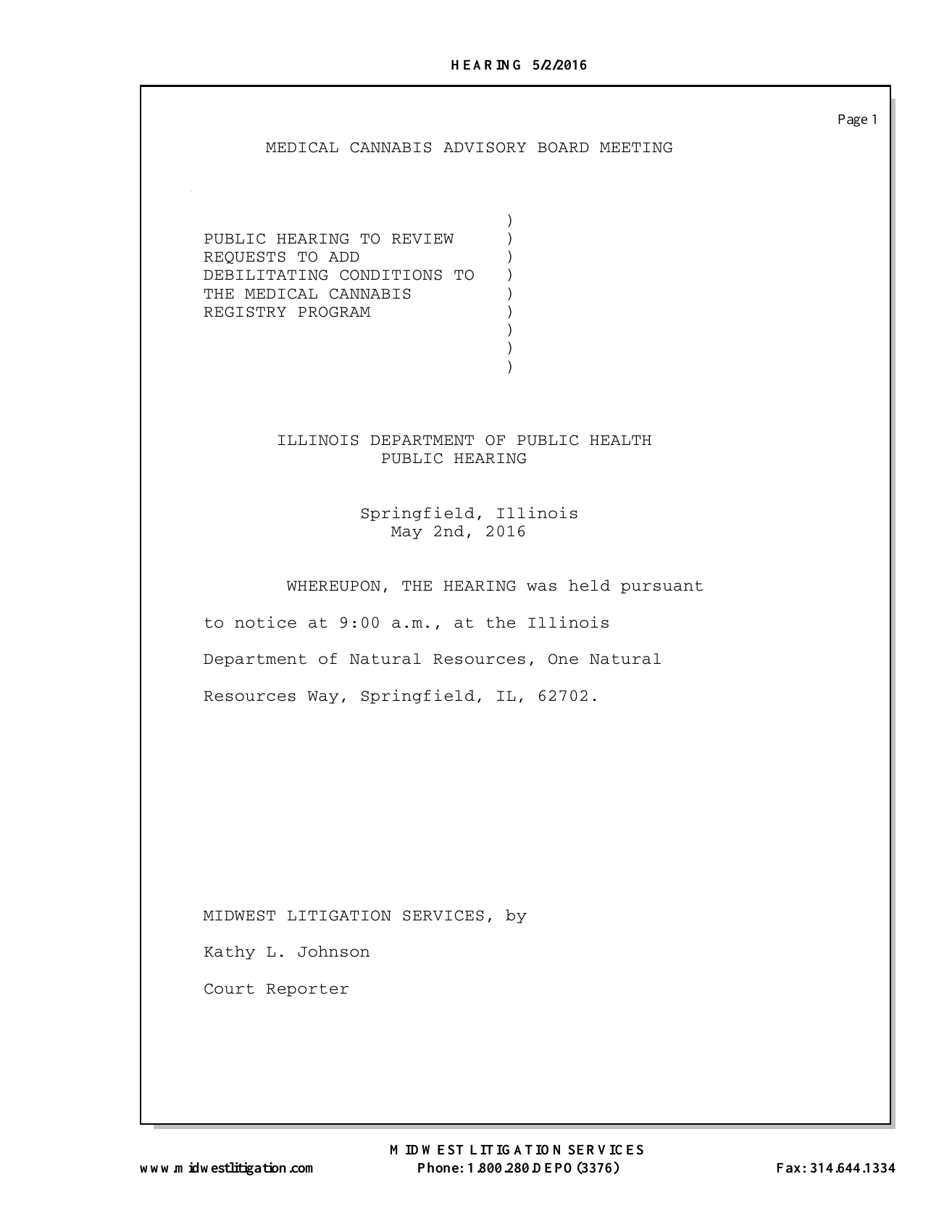
Source: Illinois Department of Public Health
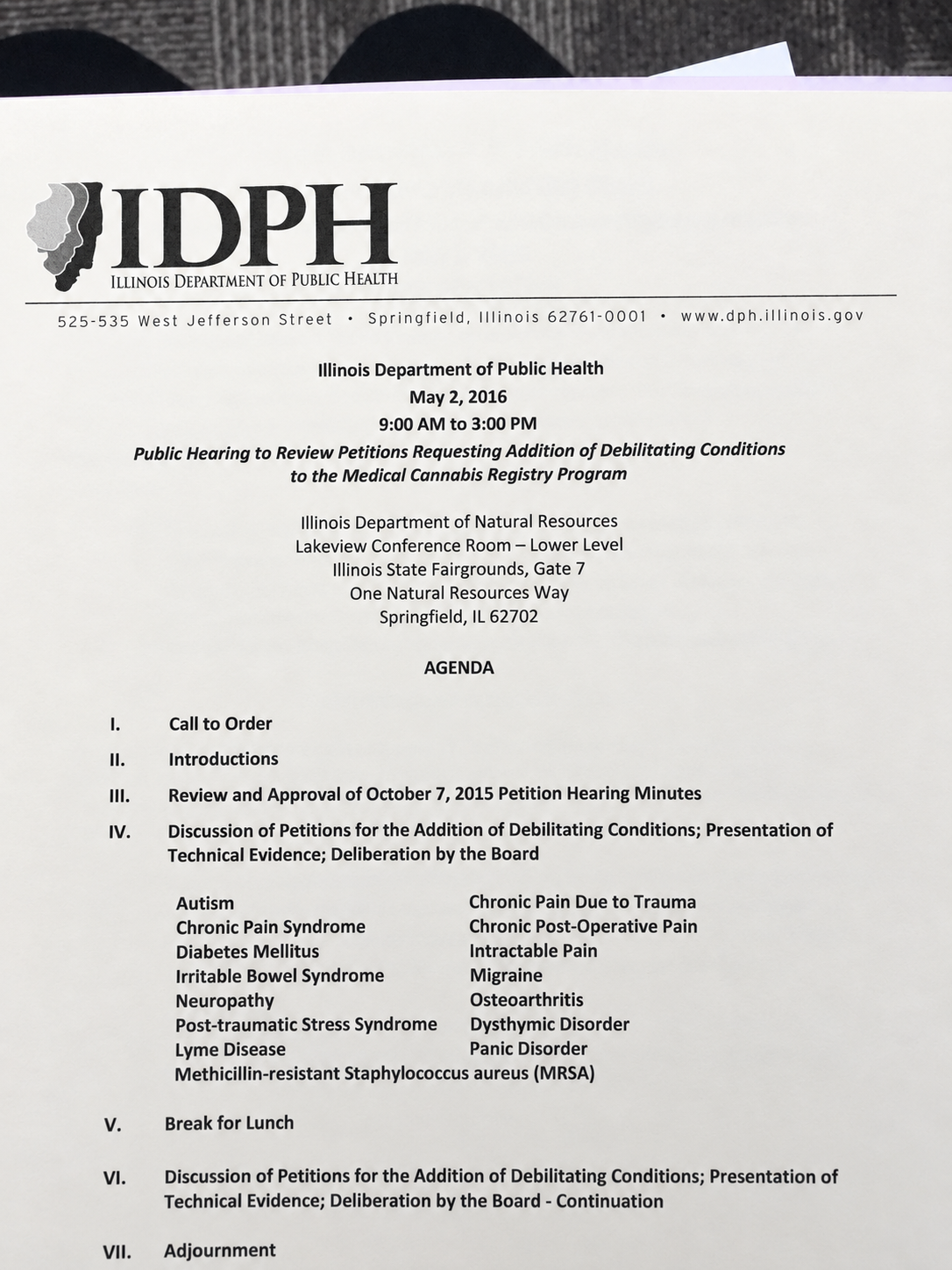
PTSD: whose suffering counts?
I presented a non-veteran patient’s account of PTSD and its effects on her life.
Feliza Castro · introducing the patient’s statementThank you. Thanks again. And this is a testimony from a patient, not a Veteran but someone else who wanted me to share her story to the Board and with the rest of you here today.
So this is Autumn of Champaign, Illinois. And she says
Autumn of Champaign · statement read by Feliza Castroin 2009 I was diagnosed with PTSD after my boyfriend committed suicide. I could not help but blame myself, and I was convinced everyone else knew that it was my fault.
I could not eat at all, or I would eat so much I would get sick. I could not sleep for days, and then I would sleep for 18 hours each night. My body was in constant flux, and I couldn’t talk to anyone about feeling their pity or judgment.
I dove into a deep, dark hole of depression. I couldn’t close my eyes without imagining Will. I would have terrible dreams of him dying in every way possible, or I would have dreams that it never happened and wake up sobbing. My doctor diagnosed me with PTSD and started to prescribe a lot of different medications, exacerbating my already debilitating flashbacks and intrusive thoughts. A college freshman at the time, I had to drop out of school.
I could no longer muster any motivation to face the world, and moved back to my parents’ house where my mom could take care of me like a child again. Sometimes even bathing me. Nothing was right, and I was constantly hiding how triggering the surrounding world could be.
I began to read more about how cannabis has helped so many Veterans with PTSD, whose symptoms seemed so much more severe than mine. I started to smoke cannabis and started to feel like myself again. I could sleep on a regular schedule and enjoy my friends for the first time in two years.
I got a job I really like, which allowed me to transition back and to socialize, regaining the outgoing personality that everyone knew before my PTSD diagnosis. I still struggle every day, but I no longer view death as my only exit from this pain. I feel free and independent and like I’ve regained so much of my life. This is all thanks to cannabis, that at, currently in Illinois, I’m not legally allowed to possess. Cannabis saves so many lives of those with PTSD, and if I hadn’t given it a chance I’m certain I would not be sharing this story with you today.
Her words carried their own weight. My responsibility was to bring them into the room.
View the official record · pages 210–212 ↗Open the original video ↗
Afterward
Gratitude
was the point.
After the hearing, I recorded one more message for the patients who had trusted us with their stories.
Looking back, I am proud of that young woman. She had a daughter to raise, a business to run, and very little unused space in her life. She found room for this anyway. The hours were extraordinary; the responsibility felt personal.
I could not promise patients a particular vote or a change in the law. I could make sure their accounts reached the board, answer its questions, and leave a record that would outlast the meeting. That was work worth doing. It still is.
The photograph is part of the story. So is the woman outside the hearing, recording a thank-you for the people who trusted her. But if you want to know what I was doing in Springfield, turn the pages. I put it on the record.
Three minutes at the microphone. A great deal of life behind them.
Leave a Reply